A commercial HVAC emergency unfolds in ten stages: drift, efficiency loss, imminent failure, failure, notification, vendor engagement, on-site diagnosis, parts, the fix, and post-repair. The first three happen quietly, often over weeks, while the unit is still cooling the space. Everything that makes the emergency expensive happens in the last seven.
If you run a multi-location operation, whether that’s restaurants and QSR, retail, convenience stores, automotive service, bank branches, or medical and dental offices, this sequence is playing out somewhere in your portfolio right now, on a rooftop unit nobody is watching. To keep it concrete, follow one rooftop unit: the one cooling a restaurant dining room in the middle of summer.
You will not be present for any of these stages. Your people will. Here is what each one looks like from where they are standing, who ends up owning it, and where it could have stopped. Along the way you will see where commercial HVAC maintenance changes the outcome, and why the HVAC maintenance cost of an emergency is so much larger than the repair invoice.
Stages 1 through 3: The quiet stages commercial HVAC maintenance should catch
Stage 1, drift. The rooftop unit over the dining room starts to change. It draws a little more current than it did last month, working harder to hold the same setpoint. Nothing is broken. The dining room is comfortable, the doors are open, and nothing looks wrong.
Stage 2, efficiency loss. The unit is now working harder to do the same job. Run times stretch. Cycles get shorter and more frequent. It still holds setpoint, most of the time, but it is spending more energy and more compressor life to get there.
Stage 3, imminent failure. The stress compounds and the unit can no longer hold setpoint. At first it’s subtle, a couple of degrees off on a moderate afternoon. Then it’s obvious: a hot day arrives and the dining room never catches up.
Whose eyes. Nobody’s. That is the whole problem with these three stages. A customer mentions it’s a little warm and the manager thinks what everyone thinks in July, which is that it’s July. The energy bill that would have shown the extra run time doesn’t exist yet. It lands in accounting thirty to forty-five days from now, after the emergency is over, as a line item nobody connects to a rooftop unit at one store. In most portfolio operations, nobody at the store ever sees that bill at all.
Who owns it. No one. Nothing has been reported, and there is no one in your organization whose job is to notice drift.
Where it could have stopped. Here, and only here, is the emergency cheap to stop. This is the work commercial HVAC maintenance exists to do, and it only works if someone can see the drift. The extra current the compressor is pulling in stage 1 is visible in equipment performance data, the collected, structured, and analyzed performance data from a piece of equipment. The industry term for reading that data against how a system should be operating is fault detection and diagnostics (FDD). FDD turns a compressor that is quietly working harder into a finding: this unit is drifting, this is the likely cause, fix it before the hot day.
The reason a monthly check or an occasional snapshot misses it is frequency. High-frequency data is equipment performance data captured at short, frequent intervals rather than in occasional snapshots. That density is what reveals the patterns, short cycling, runtime creep, slow degradation, that make prediction and diagnosis possible. It is the difference between seeing a problem develop and finding out after it fails.
Stage 4: Failure
The rooftop unit shuts down. The dining room stops cooling and the temperature climbs. The restaurant stays open, because it almost always does, but it is hot, and it is the kind of hot a customer feels the moment they walk in.
Whose eyes. The customer who steps inside, feels the wall of warm air, and decides to order to go or turn around. The customer already seated who cuts the meal short and won’t be back soon. And the crew, who didn’t cause any of it and now spends the shift absorbing complaints they have no way to fix.
Who owns it. The shift lead, who did not cause it and cannot fix it, and who is now running a hot dining room during a rush.
Where it could have stopped. Nowhere. From this stage forward, the cost of the emergency is committed. Everything that follows decides how large it gets.
Stage 5: Notification
The GM makes the call they hate making. The area manager takes it.
Whose eyes. The GM, who now has a hot dining room, a rush underway, customers walking back out, and a crew fielding the same complaint every few minutes. The area manager, who was on the way to a different store and now isn’t.
Who owns it. The area manager, from here on. Their day is now this store.
Stage 6: Vendor engagement
The area manager calls the HVAC vendor. The entire brief is: “Rooftop unit down at store 14. The Dining room is blazing hot.” That is the full report the technician will be dispatched on.
Whose eyes. The area manager is on hold. The dispatcher on the other end, who has eleven of these calls in the queue because it is 96 degrees citywide and every rooftop unit that was drifting in stage 2 picked the same afternoon to quit. Help is on the way. It is going to be a while.
Who owns it. The area manager owns the waiting. The vendor owns the queue, and the vendor is doing the best anyone can do with no information.
Where it could have stopped. This is the moment where knowing what changed would have changed everything. Diagnostics before dispatch means identifying what changed, why, and the likely cause remotely, before a technician is sent, so the first trip is the right trip. The technician arrives knowing the problem and the parts likely needed, instead of diagnosing on site. It reduces repeat visits and shortens the time equipment spends running out of spec. A call that comes in as “compressor showing signs of failure, unit 2, likely contactor or start components, here’s the data” goes to the front of a queue that is otherwise full of “it’s hot.”
Stage 7: On-site diagnosis
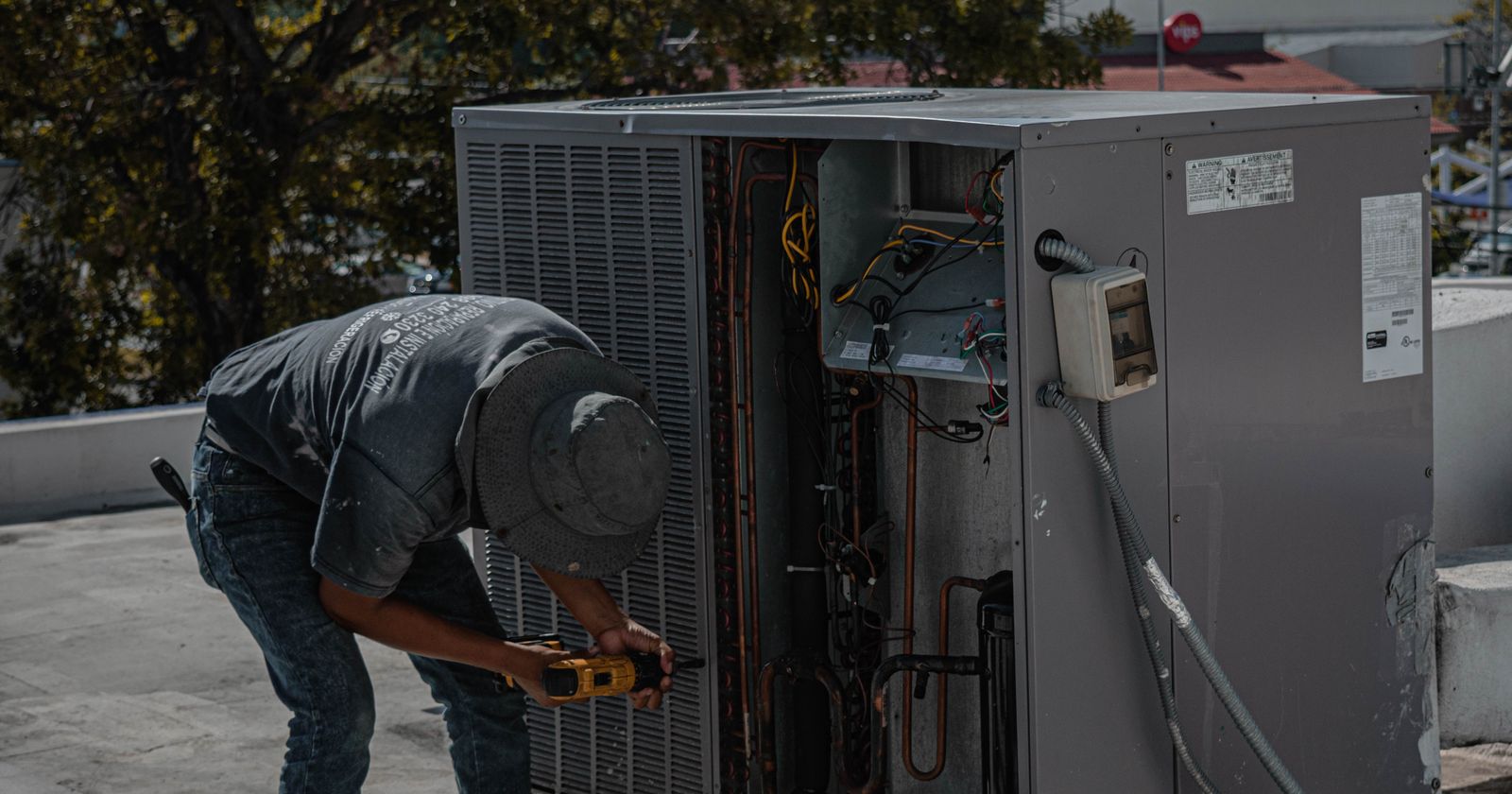
The technician arrives late in the day. Emergency rates apply. The diagnosis starts from zero, on a roof, in the heat, and runs the full range from low refrigerant charge to a failed compressor. The parts house closed an hour ago.
Whose eyes. The tech on the roof at 8 p.m., doing careful work with no history to go on. The GM working the floor below, apologizing to a thinning dining room and watching the covers drop.
Who owns it. The tech owns the roof. The GM owns the dining room. The area manager owns the phone.
Where it could have stopped. Same place as stage 6. The diagnosis the tech is building by hand on the roof is the one that could have been on the work order before the truck left.
Stage 8: Parts
The unit is 13 or 14 years old. Not ancient, but old enough that a failed compressor forces the question. The parts tech spends the morning finding a compatible compressor and the components that go with it. It takes a morning, maybe an afternoon, maybe a day of expensive shipping.
Whose eyes. The parts tech and the vendor’s office, hunting. Your store, open and hot, turning tables slower and watching walk-ins turn around, with a crew fielding the same complaint on repeat and a GM explaining to regulars why it’s warm.
Who owns it. The vendor owns the hunt. You own the lost covers.
Where it could have stopped. In a budget meeting, months earlier. System useful lifespan is how long a system performs as designed before replacement becomes the better economic choice. Keeping equipment running in spec extends it; running out of spec shortens it and stresses major components, which is why replacement compressors fail at four times the rate of originals (Carlyle Compressor Division, Carrier Corporation, “Identifying Compressor Failure Modes”). Tracking it turns repair-versus-replace from a guess into a data-backed decision. This unit is failing earlier than anyone hoped, and by the time the compressor goes there is little choice left but to replace it at emergency rates. Had it been maintained on what the data was showing, it might have made it past this summer, and the replacement would have been a line in next year’s budget instead of a decision made on a roof at 8 p.m.
Stage 9: The fix
Parts arrive. The repair takes a couple of hours of labor. Cool air returns. Everything seems good.
Whose eyes. The tech, who did solid work under bad conditions. The GM, who gets the dining room back and starts rebuilding a reputation that ran hot for two days.
Who owns it. The vendor owns the invoice. And this, the invoice, is the first moment you enter the story. Emergency labor, after-hours rates, expedited parts, a compressor, and somewhere off the invoice, two days of lost covers and customers who won’t rush back. That invoice is only the visible part of your HVAC maintenance cost for this one unit.
Stage 10: Post-repair
System functionality restored. Everyone crosses their fingers and hopes the fix holds.
Whose eyes. Everyone’s, briefly. Then nobody’s again.
Who owns it. No one. Which is why, if the repair didn’t hold, or if the failed compressor was a symptom of something upstream that is still there, the sequence quietly restarts at stage 1 and nobody knows.
Where it could have stopped. Repair validation is the use of equipment performance data after a repair to confirm the fix actually held, so a failed repair is caught before it becomes a second call. It raises first-time fix rate, lowers callback rate, and replaces argument with evidence when holding a vendor accountable. Unlike a closed work order, which only records that someone was dispatched, repair validation confirms the problem is genuinely resolved.
The owner’s view: where your HVAC maintenance cost is set
Add it up. The crew absorbed complaints through stages 4 through 9. The GM owned 4, 5, 7, and 8. The area manager owned 5 through 9. Your customers voted with their feet in stage 4 and kept voting until stage 9. The vendor did honest work in 6 through 9 with a one-sentence brief. And you entered in stage 9, holding an invoice, with no way to know whether stage 10 is the end or a new stage 1.
At no point did anyone in that chain have the one thing that would have shortened it, which is knowing what changed before the unit stopped. Not because your people weren’t paying attention. Because the information that would have told them lived in a rooftop unit that nobody was reading, and in a utility bill that hadn’t been printed yet.
This is what Act Hub changes. Act Hub reads equipment performance data from every unit at every location and applies FDD to it, so drift in stage 1 and efficiency loss in stage 2 become a work order instead of a shutdown. Whenever Act Hub detects an issue, the diagnosis arrives on the work order: what changed, the likely cause, and the correction in plain language. ForeSight365 predictive intelligence does that analysis before anyone is dispatched. After the repair, the same data confirms the fix held.
Clients running this way see 40 to 60% fewer emergency breakdowns, and repairs get done 2x to 3x faster, because the technician arrives with the answer instead of the question. Answers, not just alerts. Fixes before failures.
Whose emergency is it?
The emergency belonged to your people. The GM, the area manager, the crew, and a vendor doing the best they could with “it’s hot in here.” The prevention belongs to you, because you are the only one in the chain positioned to put the data in front of them before stage 4.
The cost of a commercial HVAC emergency is set in stages 6 through 8. It is decided in stages 1 through 3.
See how MaintenanceHub turns drift into a work order